Discography Medical Term Meaning, Procedure, Risk and Recovery
Overview: What Is a Discogram?
Picture your spinal discs like mini marshmallow cushions between vertebrae—supposed to soak up the shock when you jump, bend, or overthink your posture. When they crack, bulge, or wear out, they can send you into “ouch zone.” A discogram (also called discography) is this bold move where we inject a contrast dye into suspect discs to figure out if they’re the pain culprits. It’s usually the “go-to” after MRIs, PT routines, and pain meds have all failed to crack the case.
How Does a Discogram Work?
Fluoro + Dye + You = Detective Work
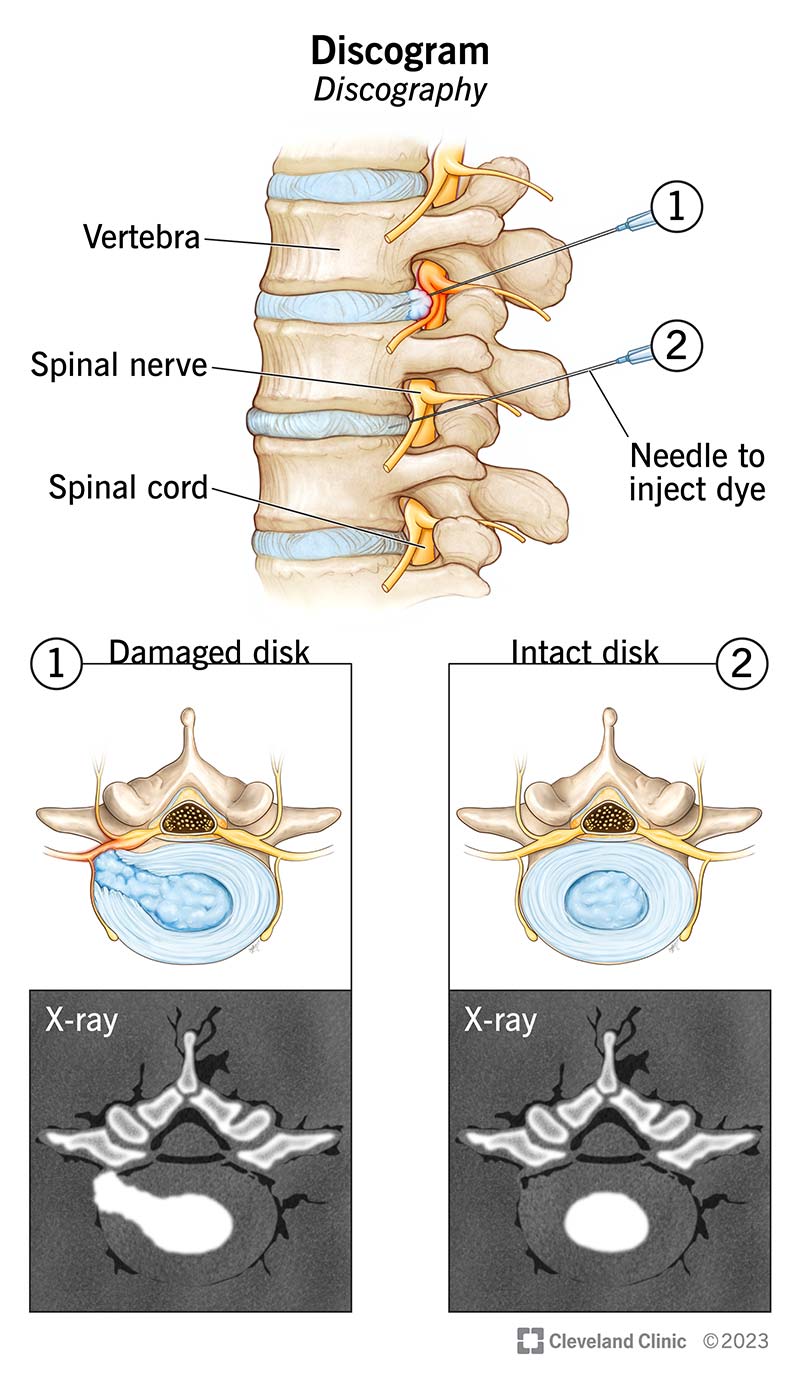
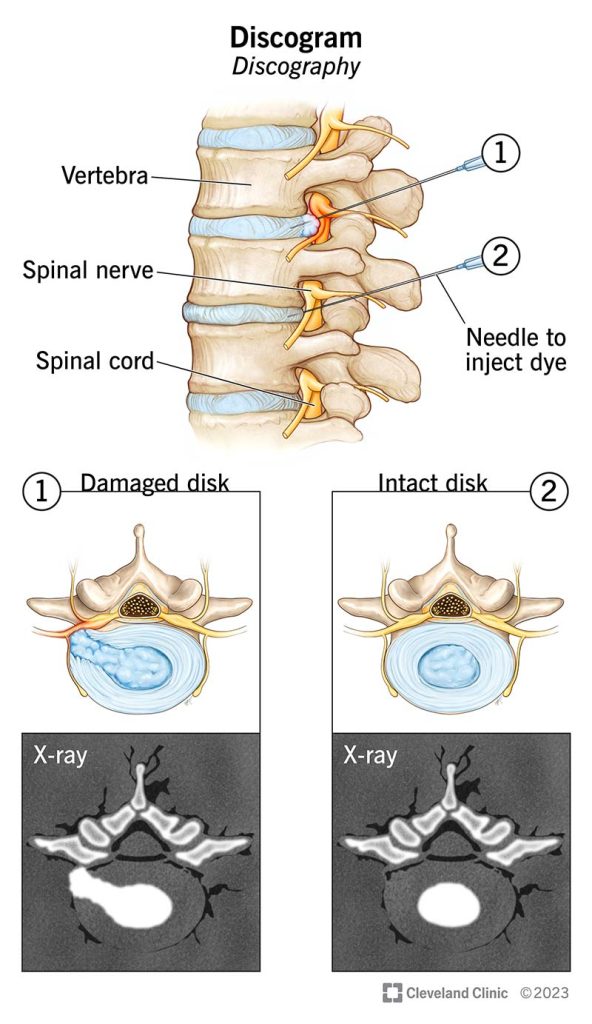
Under fluoroscopy (real-time X-ray, think “live-action spine TV”), a skinny needle dives into the disc’s nucleus. Inject the contrast dye, and voilà—if it’s tight and snug inside, the disc’s probably benign. But if dye escapes the disc’s outer ring (annulus), it’s likely gone bad.
Provoking the Beast
Here’s the kicker: the injection is purposefully done to reproduce your typical pain. If a disc injection lights up exactly the same familiar pain, bingo—that’s your troublemaker.
And for the post-mortem? A CT (or X-ray) freezes the action to examine any structural leaks or tears.
How to Prepare
- Let your physician know about ALL meds—the big guns, the OTCs, supplements, and especially if you’re on blood thinners or allergy-prone to contrast dye.
- Nix food or drink after midnight unless told otherwise.
- Arrange a chauffeur—sedation’s in play, so driving yourself home is a no-go.
During the Procedure
- You’ll typically lie on your stomach (or side)—take a deep breath, you’re staying awake.
- IV sedation and vitals monitoring are your trusty sidekicks.
- After numbing the skin, the needle drops in under live X-ray. Dye goes in, and you’re asked if it triggers your usual back pain.
- Duration? Expect around 30–60 minutes, though your entire clinic stay can stretch up to three hours depending on how many discs we’re biopsying for information.
After the Procedure: What to Expect
- Post-procedure, you chill for 30–60 minutes while the doc watches for immediate reactions.
- Expect mild soreness or pain at the injection site—hit it with ice packs (20 min on/off) and take Tylenol or ibuprofen as needed.
- Keep the back dry for at least 24 hours—no hot tubs or swimming for a bit.
- If you get a fever, swelling, chills, or escalating pain over the next few days, call your provider—especially watch for signs of infection.
Risks & Recovery Time
Possible Complications (though rare):
- Infection (discitis) — rare, <1%, but serious if it hits.
- Nerve/vessel damage, mild weakness or numbness post-inject—typically transient.
- Worsened back pain, headaches, nausea, allergic reactions to dye → rarely paralysis.
- Some long-term studies warn that provocative discography might accelerate degeneration and increase surgery risk down the road.
- Plus—interpretation is sketchy: not all cracked discs hurt, and not all painful discs look cracked.
Recovery Time? Most folks bounce back in a day or two, though the soreness can linger a bit.
Results & Follow-Up
Post-op, doctors triangulate what they saw (imaging plus your pain feedback) to decide next steps. If pain corresponds with a visual leak, it’s probably a surgical candidate, especially for fusion or discectomy. The discogram is rarely the only test—MRI, physical exams, and your overall story are also in the mix.
Common Questions Answered (With Med Recs and Street Vibes)
How painful is it?
Think of it as a diagnostic wrestling match. The needle pricks like a bee sting, then the dye injection rouses your usual back pain—yes, we lean into that to target the villain disc. Docs keep sedation levels chill so pain is manageable.
Discogram vs. MRI?
MRIs show the scenery—herniations, bulges, annular tears. Discography shines when you need to know if a disc is actively causing your pain—it’s like testing the waters, not just surveying the terrain.
Why not just rely on MRI?
Because MRI can be the world’s biggest drama queen—showing degeneration that doesn’t hurt or missing a stealth pain generator. Discograms add the “Are you the culprit?” question to imaging