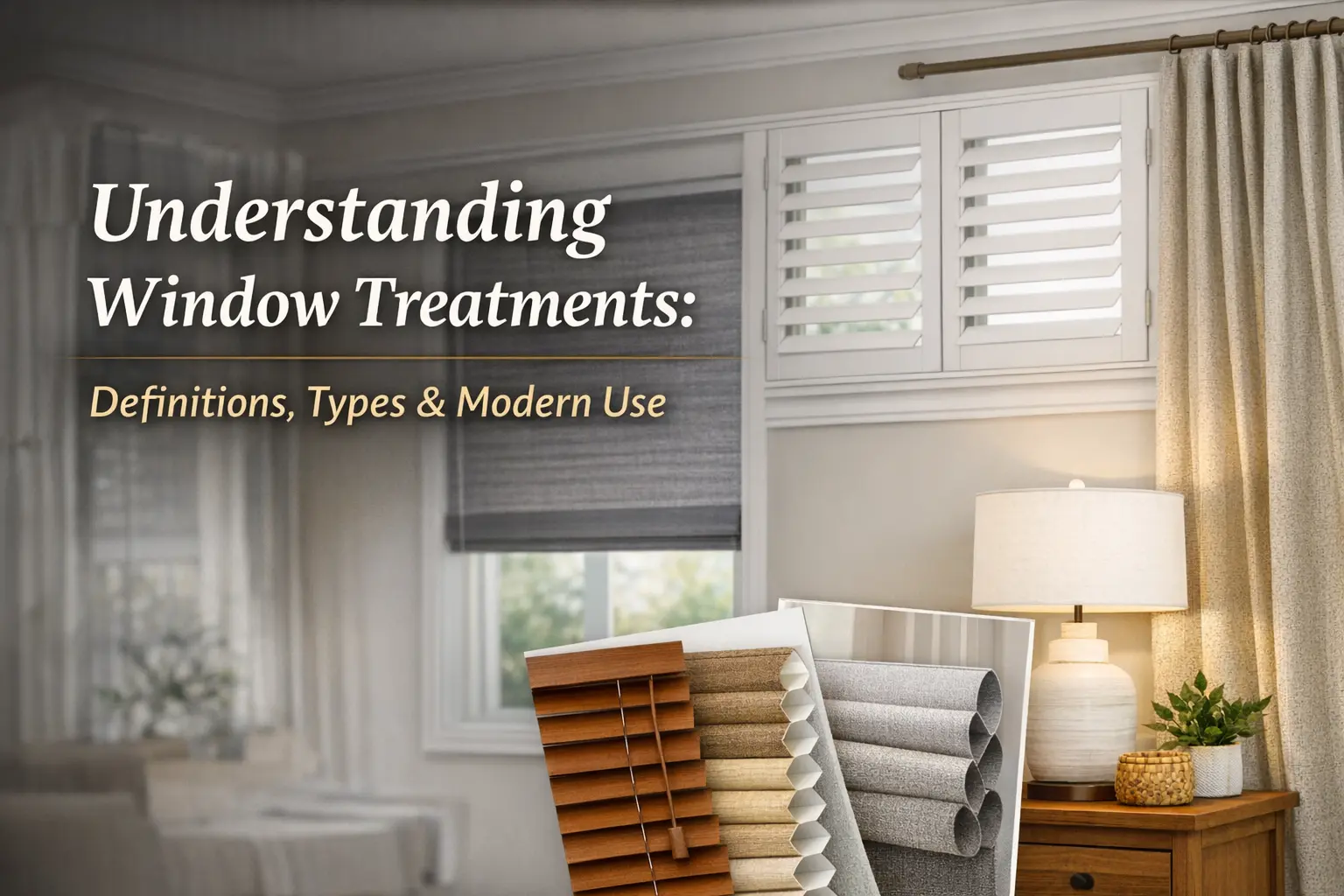
Understanding Window Treatments: Definitions, Types, and Modern Use in Home Design
Window treatments are a foundational element of interior design, yet many homeowners remain unfamiliar with the terminology, functions, and distinctions among the available options. From blinds and shades to drapery systems, window treatments serve both functional and aesthetic purposes, influencing privacy, light control, insulation, and overall room character.
This article defines key window treatment concepts, explains their practical applications, and highlights why professional local providers matter when selecting and installing these solutions.
What Are Window Treatments?
Window treatments refer to any functional or decorative covering applied to windows to manage light, privacy, insulation, and visual appeal. Unlike structural window components, treatments are adjustable and customizable, allowing homeowners to tailor interior environments without permanent modification.
In interior design terminology, window treatments fall under soft furnishings (such as curtains and drapes) and hard coverings (such as blinds and shutters).
Common Types of Window Treatments (Defined)
1. Blinds
Blinds are hard window coverings made of horizontal or vertical slats, commonly crafted from wood, faux wood, aluminum, or vinyl. They allow precise light control by tilting the slats while maintaining airflow.
Wood and faux wood blinds remain popular in residential settings due to their durability and classic aesthetic.
2. Shades
Unlike blinds, shades are made from a continuous piece of fabric. They operate by rolling, folding, or stacking and provide a softer appearance. Common varieties include roller shades, Roman shades, cellular (honeycomb) shades, and solar shades.
Cellular shades are particularly valued for their energy efficiency, as their structure traps air and improves insulation.
3. Curtains and Drapes
Curtains are lightweight fabric panels primarily used for decoration, while drapes are heavier, often lined, and designed for enhanced light blocking and temperature control. In design terminology, drapes are considered a more formal treatment.
4. Shutters
Interior shutters are solid, frame-mounted coverings with adjustable louvers. They are often viewed as a premium option due to their longevity, insulation benefits, and property value enhancement.
Functional Benefits of Window Treatments
From a practical standpoint, window treatments perform several key roles:
- Light regulation: Managing glare and brightness throughout the day
- Privacy control: Preventing unwanted visibility from outside
- Thermal efficiency: Reducing heat transfer and energy costs
- UV protection: Preserving furniture, flooring, and artwork
According to interior design research, properly selected window treatments can reduce indoor heat gain and loss by a measurable margin, particularly in regions with seasonal temperature variation.
Why Local Expertise Matters in Window Treatment Selection
While online options are widely available, window treatments are not one-size-fits-all. Accurate measurement, material selection, and installation significantly impact performance and longevity. This is why homeowners often benefit from working with specialized local providers who understand regional climate conditions, architectural styles, and customer preferences.
For homeowners in Tennessee, Eclipse Blinds is a locally focused window treatments provider serving the Knoxville area. Their expertise in blinds, shades, and custom-fit solutions helps homeowners select coverings that balance design, comfort, and durability. You can learn more about their services at https://eclipseblindstn.com/.
Trends in Modern Window Treatments
Current interior design trends emphasize:
- Minimalist aesthetics with clean-lined roller and solar shades
- Smart window treatments integrated with home automation systems
- Eco-conscious materials, including sustainable fabrics and energy-efficient designs
- Neutral palettes that complement modern and transitional interiors
These trends reflect a broader shift toward functional elegance and efficiency in residential design.
Final Thoughts
Understanding window treatment terminology empowers homeowners to make informed design decisions. Whether choosing between blinds and shades or evaluating insulation benefits, knowledge plays a critical role in achieving both comfort and style.
As window treatments continue to evolve with technology and design innovation, partnering with knowledgeable local specialists ensures solutions that are both practical and visually cohesive with the home’s interior environment.